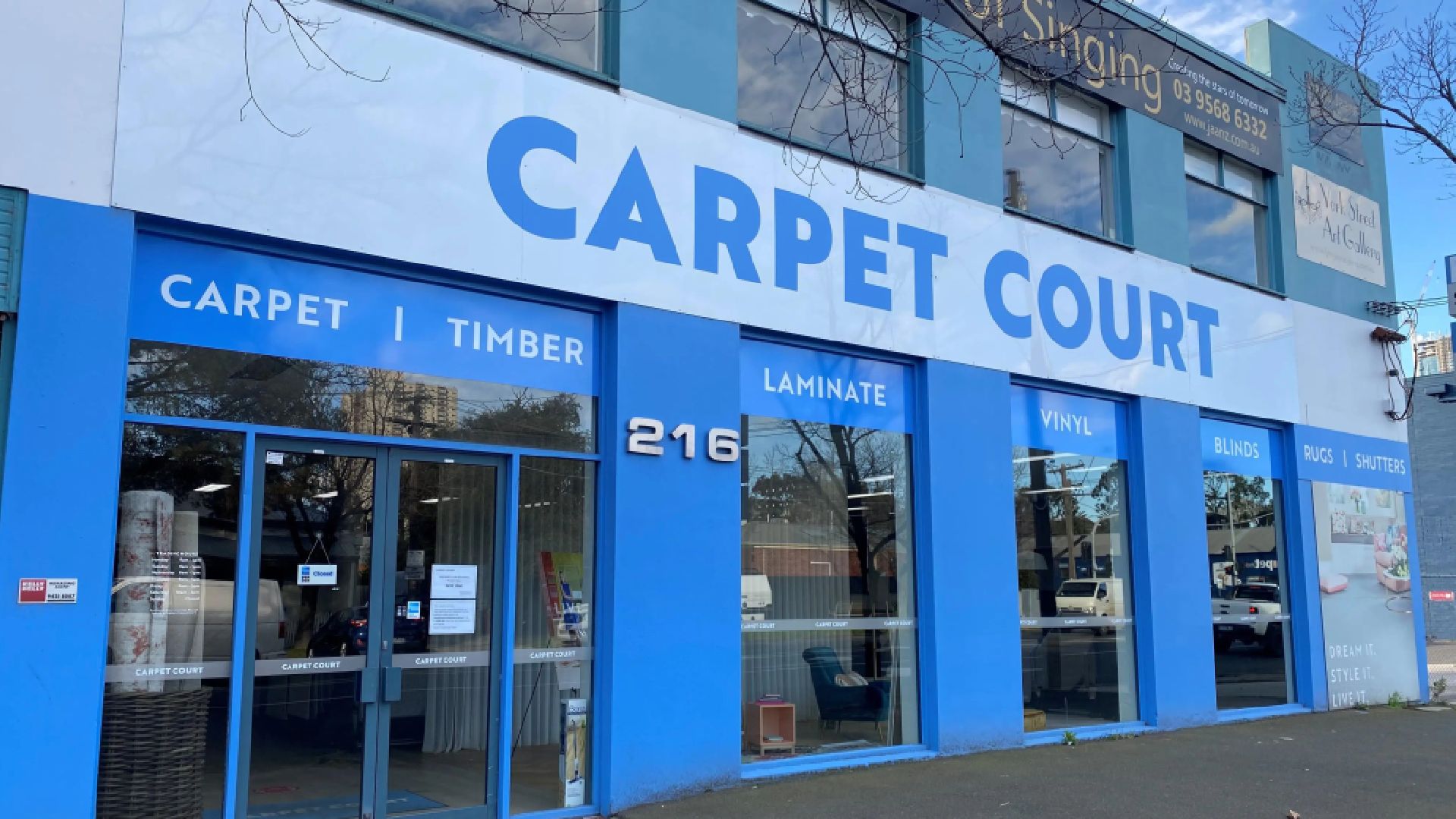
Bevan manages both of Carpet Court's Melbourne stores - South Melbourne and Brighton - for owners Sharon and Jason. Between the two sites the team handles somewhere between 400 and 500 flooring and window furnishings jobs a year, selling to residential clients and to trade referrals from builders and interior designers.
When Sharon and Jason bought the business, they inherited its systems along with it - including a quoting tool built twenty years earlier for a carpet-only shop.
The Challenge
A quoting system built twenty years earlier couldn't keep up with a business now selling floors, vinyl, and window furnishings
Quoting was a marathon, and things kept getting missed
The old system was built to quote carpet - nothing else. As Carpet Court expanded into hard flooring, vinyl, and window furnishings, it simply couldn't process what the business was actually selling. Quotes came out wrong. Every quote meant exporting, importing, and saving through a clunky, ageing workflow that regularly crashed under normal load.
There was no integration between a client walking in and a quote going out - everything lived on paper pads and post-it notes, or buried in an email chain that wasn't linked to a person and had to be hunted down by memory.
"We had a lot of issues because it was designed for carpet, and we do carpeting, we do hard flooring, we do vinyl - and because we now also do window furnishings, it couldn't comprehend or process the products and the quoting system that we needed."
Nobody could see what was converting, and small amounts were leaking out every transaction
With no follow-up system and no way to track which quotes turned into jobs, deals were slipping through unnoticed. And because everything relied on handwritten notes, missed details - a finish, a trim, an extra service - meant Carpet Court were eating the cost themselves to go back and fix the problems. Individually it might only be an extra $12 or $15 per job, but across hundreds of jobs a year, it added up.
"We'd lose money in the back end because it wasn't recording all the data at the front. It might only be $12, $15, but if it's every transaction, obviously that adds up."
Two earlier attempts to fix it had already fallen over
This wasn't the first time Carpet Court had tried to solve the problem. A couple of years earlier, Jason had set up HubSpot himself - contacts imported, phones connected - but with no one championing it internally, and longer-tenured staff set in their ways, it never got real use. The data sat there, half-synced, untouched.
They also tried DEAR, an inventory system with Sharon and Jason funding the initial setup. Head office support was there at the beginning, but that fell away. DEAR was built for a business scaling and had all of Carpet Court decided to switch maybe it would have worked. But it wasn't setup for a situation where every store did things slightly differently - and it was never really a user friendly CRM to begin with.
"They had no kind of communication support from head office or from DEAR, so it just fell." Asked how that felt: "Waste of money."
The follow-up process that survived all of this was entirely manual. To work out who needed calling, Bevan had to cross-reference the Outlook calendar against a paper filing cabinet, quote by quote.
"Oh my god, it would take me like a day. You'd have to check the measure diary, then check the folder to see if it was going ahead or not, then pull everything out and follow them up. It was a complete nightmare."
The Solution
A CRM built around how Carpet Court actually operates - with one person to build it with
One person, hands-on the whole way
When Carpet Court decided to try and make HubSpot work again, they ended up working with The Systems Business. What made it stick was working with one person who understood the business, end to end - every customisation, every question, every issue going to the same place.
"We wanted to work with one person - and it's worked out amazingly. We've managed to get real hands-on interaction, get all our customisation done, and if we've had any issues, we go to the same person."
A customised system, not a template dropped onto the business
The CRM was built around how Carpet Court actually quotes and gets paid, not a generic template. Line items now populate automatically based on what a quote is for - a carpet job pulls in the line items a carpet job always needs, like taking up and disposing of the existing floor, without anyone having to remember to add them by hand.
Terms and conditions are built into the quote itself, so when a customer signs digitally, they're accepting the T&Cs in the same step. Deposit and balance amounts calculate automatically - no separate document, no separate step.
Once a quote's accepted, it generates a Xero invoice on its own, carrying every line item across with it. Payments reconcile without anyone copying and pasting information between HubSpot and Xero by hand.
Both stores, which had always run separately, now run on the exact same system.
"We've created a customised CRM system that works best for our business - from how the inventory is set up, to how all the line items are populated. It's made my life as a manager being able to track everything and make sure the right information is being done."
Getting the team on board mattered more than getting the tech working
Going live meant both stores running identically for the first time, with some longer-tenured staff not naturally open to change - that was the real risk, not the software. The rollout leaned on a group training session, a supporting written guide, and dummy accounts so the team could practise at their own pace instead of being thrown in cold.
The training helped, but what really removed the resistance was a handful of small things that took admin work off the team's plate. Line items populated on their own instead of being built by hand. Leads could be entered straight into HubSpot through a quick form. And booking a measure meant a client's contact details pre-filled into the calendar scheduler, instead of being typed in twice.
Bevan remembers the moment it clicked for one of the team: "I can see the benefit of doing this because all the line items populate, I don't have to try remember everything."
The Outcome
Three quotes in the time it used to take to do one
Quoting got fast
The old process was a chain of manual handoffs: build the quote, wait for the line items to load, re-enter details that had already been collected somewhere else, transfer everything into a new system, save it as a PDF, then create and send an email. If too many people were using the system at once, it would crash partway through - and Bevan would start again.
Now it's four steps: create the quote, save it, save it against the customer, send the email. No exporting, no separate PDF step, no waiting to see if the system holds up under load.
A quote that used to take fifteen minutes - longer if the old system crashed mid-way - now takes about five.
"I can do three quotes in the time it used to take to do one."
A full day of follow-ups is now a habit the team runs without Bevan
Follow-ups are automated every seven days, and the team checks them each morning as a matter of routine. Bevan barely touches them now - and conversion has gone up since follow-up stopped depending on someone remembering to do it.
"I don't do any follow-ups. The guys every morning have got it into the habit, because we can track it and it's done every seven days. I don't have to worry about it."
One number instead of three
Every transaction used to carry three separate reference numbers - one for the quote, one a purchase order, another used with suppliers and accounts. Now a single Xero-generated invoice number follows the job from store to install to supplier.
"That's a massive amount of time that's saved, because we can just use one number on all reference points for us."
Real reporting, for the first time - including leverage with suppliers
Monthly conversion data now exists at all, which alone was new. It's also changed conversations outside the business: seeing exactly how much of a supplier's product Carpet Court was moving gave them a case to ask for better terms.
"We're now in a position where we can actually track how much we're moving of your product, so you need to kind of look after us a bit better."
Two stores that used to run completely separately now run on the same system - doing three times the quotes, with follow-ups nobody has to remember to do.