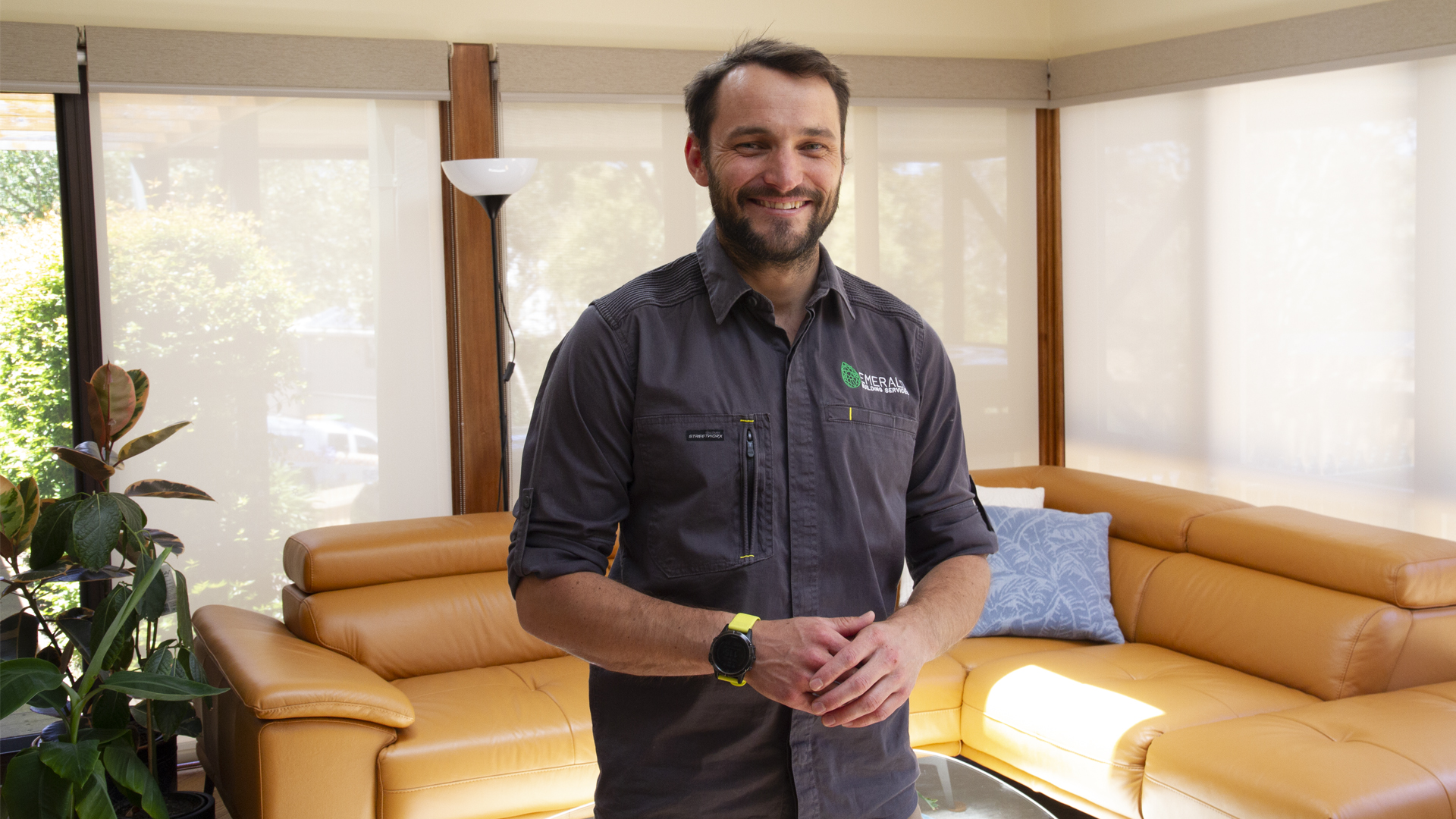
Emerald Building Services is a bespoke home builder in Melbourne. Tim runs the business as Director; Kelly is the Operations Manager alongside the construction team. They build custom homes for clients at a price point where trust and clarity matter as much as the finished house.
When Kelly first joined, the sales operation didn't really exist as a process. It was Tim's inbox, Kelly's notebook, and a lot of what everyone knew being carried around in someone's head.
The Challenge
A business like Emerald's couldn't keep relying on someone remembering to follow up
"I don't know what I'm really doing"
Kelly's onboarding was direct.
"He hired me and goes, 'I don't know what I'm really doing. Look at my emails and get and do leads and work it out yourself,' basically."
There was no system to hand over. No documented process. No shared view of who the leads were, where they were up to, or what needed to happen next. Kelly built her own version of a process from scratch - a notebook, sticky notes, mental checklists. It worked, but only because Kelly was holding all of it together.
"I've got sticky notes everywhere on it. Well the big book holds my sticky notes. Because it's a checklist for me."
Follow-ups happened when Kelly remembered them, or when Tim asked. Sometimes weeks would slip past.
"There wasn't really any process or three weeks down the track Tim would go, 'Oh, have you rang those people yet?' And I'm like, 'Oh, crap, no, I haven't.'"
That's not a Kelly problem. That's a system problem. A business at Emerald's price point can't rely on someone remembering.
Even where a process did exist, it still ran entirely through Kelly's hands
Kelly did have a set of standardised emails to send clients at each stage - but they all lived in one giant Word document. Every time she needed to reach out, she'd have to dig through it to find the right one, then copy and send it manually.
The project brief was the same story, just with more steps. Every new client relationship at Emerald starts with one - a document capturing what the client wants to build, what they need, what matters to them. Getting it filled in used to look like this:
Kelly emailed the client a PDF. The client saved it, printed it, filled it in, scanned it, emailed it back. Kelly reviewed it, forwarded it to Tim, and uploaded it to Google Drive. Ten manual steps between Kelly and the client. Every touchpoint was Kelly's hands on the process.
The Solution
A pipeline that puts the whole process in one place for Kelly to run
Leads come into the CRM. Kelly can see every lead at a glance - where they are in the process, what needs to happen next, what's been said before.
Automated emails at each stage handle the touchpoints Kelly used to write manually. When a lead reaches a certain stage, the right email goes out without Kelly having to compose it.
The project brief is now two steps for Kelly. She moves the deal to the right stage in the pipeline. That triggers an email to the client with a pre-filled form. When they submit it, the form data merges onto the PDF template and emails automatically to the client, to Tim, and to Kelly - and uploads to Google Drive at the same time. Ten manual steps became two.
Video content in the automated flow does something even more valuable than time-saving. By the time a lead gets on a call with Tim, they've already seen him in short videos explaining Emerald's approach, their process, what to expect. They arrive warm.
"So when clients actually get to me, they feel like they know me already through the little videos."
The Outcome
What changed for the business
Time back for Kelly, which meant time back for Tim. With the sales process running itself, Kelly could take on other work that used to sit on Tim's desk. Tim, in turn, could focus on the parts of the business only he could do.
"So from that point of view, it's just freed her up massively to actually take on other tasks in the business, and take those tasks off me that I was still doing so I can focus on the my part of the business that I need to be working on to bring in new projects, and nurture clients."
Peace of mind. Kelly's phrase, not ours.
"I guess it's kind of peace of mind knowing that this system is there and I haven't missed anything. I can just open that up and go, 'Okay, this is what I'm going to do. Or this is what I've got to action.'"
Better clients, not just more clients. The nurture sequence doesn't just build trust - it filters. Prospects who aren't a fit for a bespoke build see what Emerald does and opt out. The ones who do book a call with Tim have already qualified themselves in.
"It's just helping drive the right clientele closer to us."
Positioning as an authority. Bespoke home builders don't usually run this kind of process. Clients notice.
"By the time they get to me, they already trust our process. Because it's such a professional streamline process that they're actually - for a builder - they're super impressed by the time they get to that point already before they've even had that discussion."
"A couple of times, it's been 'You're the only building company that's got back to me.'"
The operation that started with Tim saying "work it out yourself" is now a process that does the work.